

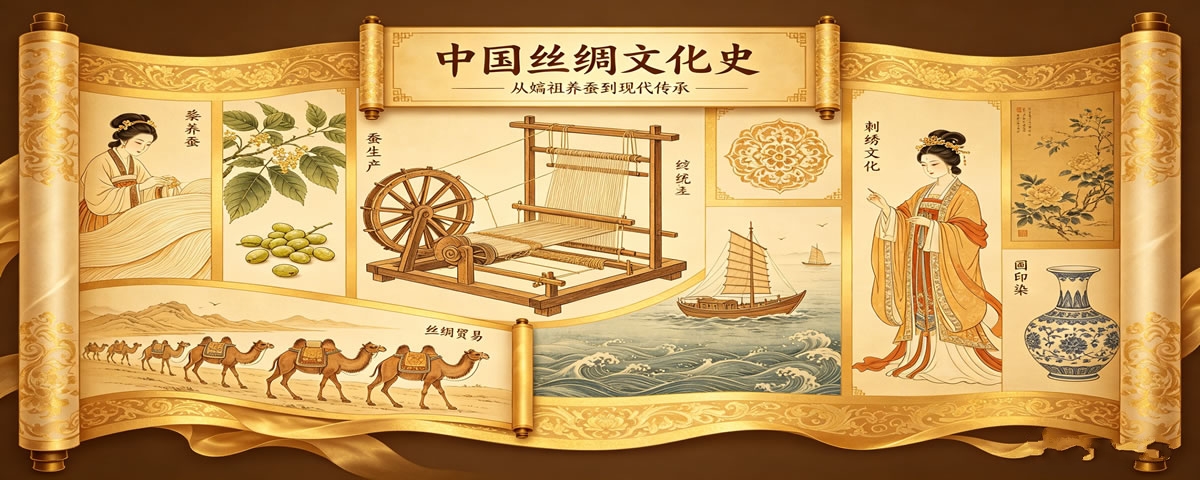
Chinese Silk Culture 中华丝绸文化
Chinese silk is one of the greatest inventions in ancient China, with a history of more than 5,000 years. It represents the wisdom of the Chinese nation and has become an important symbol connecting China and the world.
中国丝绸是中国古代最伟大的发明之一,拥有五千多年的悠久历史,它代表着中华民族的智慧,成为连接中国与世界的重要符号。
Ⅰ. Origin and History of Chinese Silk 丝绸的起源与历史
According to historical records, the Chinese began raising silkworms and reeling silk as early as the Neolithic Age. Silk was once a precious item exclusive to the royal family, and later gradually entered people's daily life, becoming an important part of Chinese traditional culture.
据史料记载,中国人早在新石器时代就开始养蚕缫丝。丝绸曾是皇室专属的珍贵物品,后来逐渐走入民间生活,成为中华传统文化的重要组成部分。
Ⅱ. Silk Craftsmanship and Intangible Cultural Heritage 丝绸工艺与非物质文化遗产
Traditional Chinese silk craftsmanship includes mulberry planting, silkworm raising, silk reeling, dyeing, weaving and embroidery. These complicated skills have been inherited to this day and are listed as China's national intangible cultural heritage, showing the unique charm of Chinese craftsmanship.
中国传统丝绸工艺包含植桑、养蚕、缫丝、染色、织造、刺绣等复杂工序。这些技艺代代相传,被列为中国国家级非物质文化遗产,展现出中国工匠的独特魅力。
Ⅲ. Silk on the Ancient Silk Road 丝绸之路上的丝绸
As the most representative product of the Silk Road, Chinese silk was exported to Central Asia, West Asia and Europe through the ancient Silk Road, promoting cultural exchanges and economic and trade cooperation between the East and the West.
中国丝绸作为丝绸之路最具代表性的商品,通过古丝绸之路远销中亚、西亚与欧洲,促进了东西方的文化交流与经贸合作。
Ⅳ. Contemporary Value and Global Influence 当代价值与世界影响
Today, Chinese silk is still loved by people all over the world. It combines traditional culture with modern design, showing the soft power of Chinese culture to the world and inheriting the spirit of openness and cooperation.
如今,中国丝绸依然深受全球人士喜爱。它将传统文化与现代设计相结合,向世界展现中华文化软实力,传承开放与合作的精神。
Copyright Notice: This article is compiled by Shanghai World Trade Portal. Please indicate the source for reprinting.
版权声明:本文由上海世贸网整理编辑,转载请注明出处。